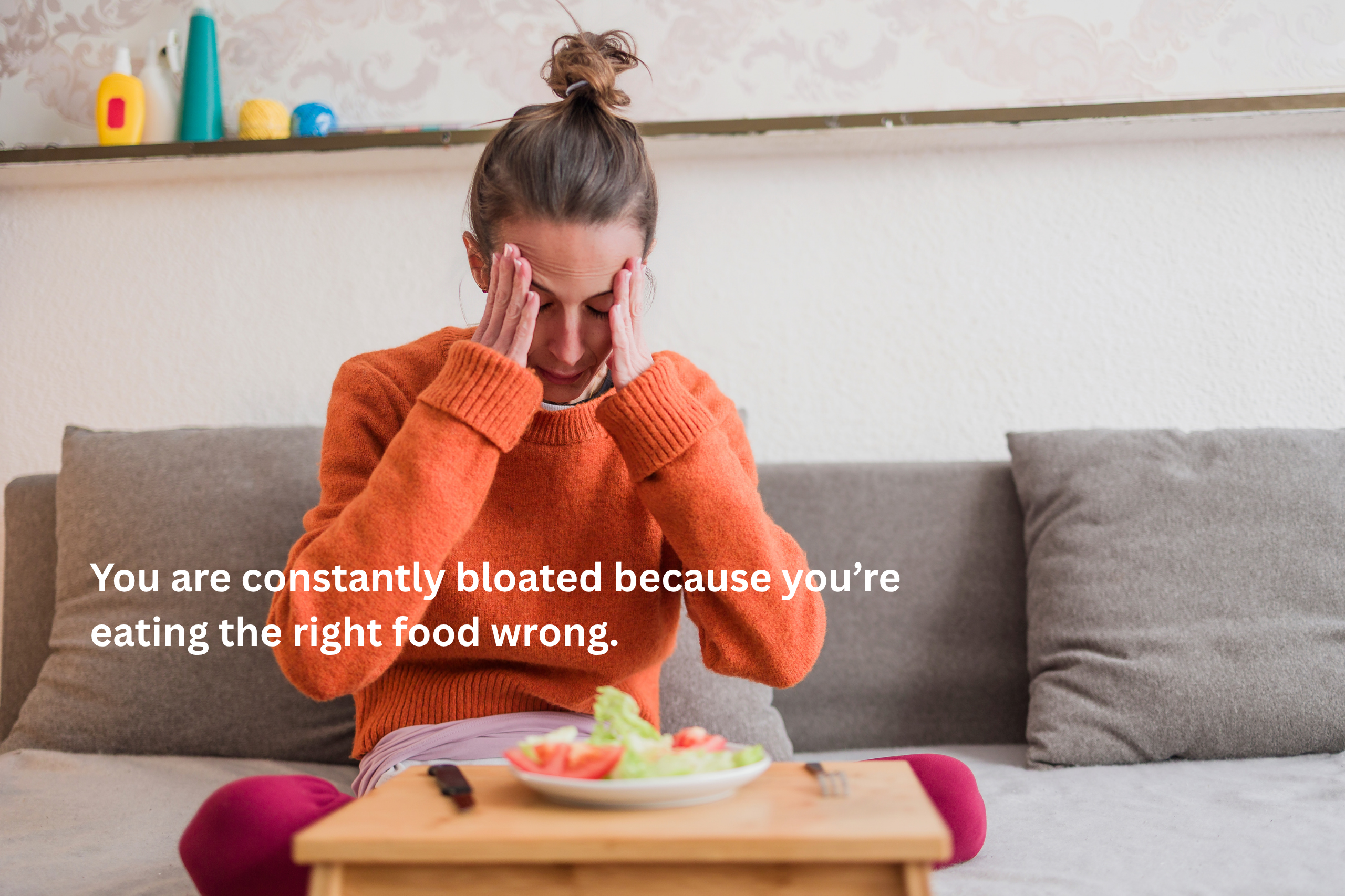
You’ve been doing everything right. You’ve changed your whole routine, your habits, your nutrition, but still aren’t seeing results even though you are already doing so much. You’re doing everything right but your body isn’t changing, you end-up exhausted from trying to keep up with everything and you still don’t feel strong or confident in your body because you constantly feel and look bloated.
So you keep looking and searching for what the secret is. Why isn’t all of this working for you? Why are you bloated all the time?
No matter what you try, your body doesn’t seem to be responding the way it should. The reason why is very simple. It’s because you’ve been following mainstream workout and nutrition advice which usually ignores two very important things.
Your body’s hormonal balance and the regulation of your nervous system. And when these are out of balance, it keeps your system stuck. So today, I’ll explain to you exactly why you constantly feel bloated and are stuck.
I know you were expecting a nutrition tip but hear me out, it will be worth it. You’ve been changing your nutrition. You now eat balanced and nutritious meals full of nutrients which should feel satisfying and should give you energy; but it’s not.
Making all of these choices feels like a full-time job. You are constantly overthinking about your food, what you need to eat, meal prep or have. You feel guilty every time you eat something that wasn’t planned and you second-guess yourself constantly.
“Was my dinner right? Did I make the right choices? Should I have eaten this instead?”
You are constantly afraid of making mistakes and screwing up everything. You spend more time thinking about food and being scared of what’s on your plate than time enjoying your food and eating. So you end-up constantly stressed about your food and eating in a state of stress which matters more than you think.
You’re also trying to do it all. You are living on autopilot and surviving your day barely keeping up with your to-do list. You’re exhausted, overwhelmed and feel like you’re not doing enough. But you are already doing so much and in the midst of it all you are trying to care for yourself by eating healthier food but the weight on the scale doesn’t bulge and you are constantly bloated. Am I wrong so far?
You are chronically stressed and your nervous system plays a direct role in your digestion affecting food absorption and how you can use the nutrients afterwards. So even the perfect nutrition can become inadequate when it comes to stress.
When your body feels stress, it reacts through the fight-or-flight response which has several impacts on your digestion.
Your body will always prioritize the stress response over digestion. When your body feels stressed blood flow is redirected to where it’s most important. One place in your body where blood flow isn’t vital to help you survive a dangerous situation is your digestion.
Blood will therefore be redirected from the gastrointestinal tract toward muscles and vital organs. Less blood flow for your stomach means less digestive activity; enzymes, motility, and absorption. Everything will be affected.
This will make you feel heavy, like food is just sitting in your stomach. It will mean more fermentation in your intestines which can lead to a feeling of pressure and bloating. You might be experiencing constipation, diarrhea and nausea.
Since digestion isn’t a priority, hunger signals might not get sent off and you might simply not get hungry or feel full only after a few bites. You might know that you are supposed to eat more but simply feel like you can’t. You can also become hyper-reactive to certain foods since your body is dysregulated (1).
Over time, you are still consuming nutrients but you can’t absorb and utilize them properly which can lead to continuous fatigue, brain fog or concentration.
So even if you are eating the right food, you won’t be able to absorb the nutrients from it properly.
Another way stress affects your digestion is by your stomach’s acid content. Stress can reduce your stomach acid, especially under chronic conditions, and enzyme production in some cases, making it harder to break down the food from your meals. For some people, it may also increase acid therefore provoking discomfort. Either way, the breakdown process of the foods you are eating becomes less efficient.
Stomach acid is usually produced in your stomach and controlled by your vagus nerve (parasympathetic nervous system) which stimulates acid secretion and hormones like gastrin which increase acid in the stomach.
But stress (parasympathetic nervous system) does the opposite which means stomach cells will produce less acid. Cortisol (our stress hormones) will also impact the sensitivity of your stomach cell and disrupt your brain-stomach connection. Over time this will reduce acid production in your body.
That being said, have you ever felt like you had more reflux, burning sensation or discomfort because of stress. These symptoms don’t necessarily mean that more acid is being produced. This comes from an increased sensitivity of your esophagus and stomach to normal acid levels. The valve at the top of your stomach can also relax more under stress which means more reflux for you. Lastly, the longer food and acid sits in your stomach, the higher are your chances of reflux and irritation.
So you can both have low acid production and feel symptoms of acid reflux (2).
In the long-term, low acid can lead to poor protein digestion, reduced nutrient absorption like iron, B12, magnesium, and increased bloating (due to incomplete breakdown of food). Which again is happening even if your nutrition is on-point.
Gut movement refers to the contractions of smooth muscle that move food through your digestive tract. These movements are mostly controlled by your nervous system, working together with the brain. Your parasympathetic system stimulates the movements while the sympathetic (stress pathway) slows or disrupts movement.
If food moves too fast through the intestines it means there will be less time for water and the nutrients to be absorbed. Which can cause diarrhea, urgency or cramping. Stress hormones and other molecules can overstimulate certain pathways, especially in the colon.
If food moves too slow food will sit longer than it should provoking constipation, bloating, feeling of heaviness or pressure.
When the parasympathetic (vagal) activity is less activated and the blood flow is impaired, this will likely lead to weaker, less coordinated contractions; often associated with irritable bowel syndrome. So when the stress response is heightened, it affects nutrient absorption, bacterial balance, gas production and how you feel (3).
Finally, the microbiome is this community of microorganisms living in your digestive system. They usually help with breaking down food, producing vitamins (like B vitamins and vitamin K), regulating your immune system and the communication with your brain.
This system is highly sensitive to stress which modifies your gut environment like the pH level which will change the conditions in which bacteria grow and influence which bacteria will thrive in this environment. Some bacteria decrease, while others that are more inflammatory or stress-resistant may increase (4).
Chronic stress can expose bacteria to immune signals they normally wouldn’t face, which can trigger inflammation and shift the gut microbiome. The immune system then starts interacting more aggressively with it.
Once the microbiome shifts, it will affect fatty-acid, vitamin B and K production and synthesis and change neurotransmitter precursors like serotonin. These changes can influence your mood, stress sensitivity, appetite and digestion. Your digestion will be less efficient, you will have more gas and bloating, less nutrient production and absorption, and more inflammation.
So you understand now that it’s not just about what you eat but how you eat it. Eating a meal under pressure, while distracted and anxious isn’t the same. While one meal might not make much of a difference, doing it in a chronic state of stress will.
That doesn’t mean that stress cancels out your good nutrition, not at all. It might reduce its benefits over time but you still should concentrate on having healthier meals in your diet. But balance shouldn’T only be about the food on your plate, it should also come from regulating your nervous system.
If you have been doing all the right things in your nutrition but still feel stuck, maybe it’s time that you look into what might be dysregulating your body and digestion instead. To figure it out, you can either book a free call with me to look into your nutrition and determine if it is a nutrition or nervous system regulation problem or get the nervous system regulation blueprint to manage stress and bring back calm and balance in your body.
No spam. Just real support to help you heal, reset, and feel like yourself again.