When you are hungry; you eat.
When you’re not; you don’t.
Seems simple enough, right?
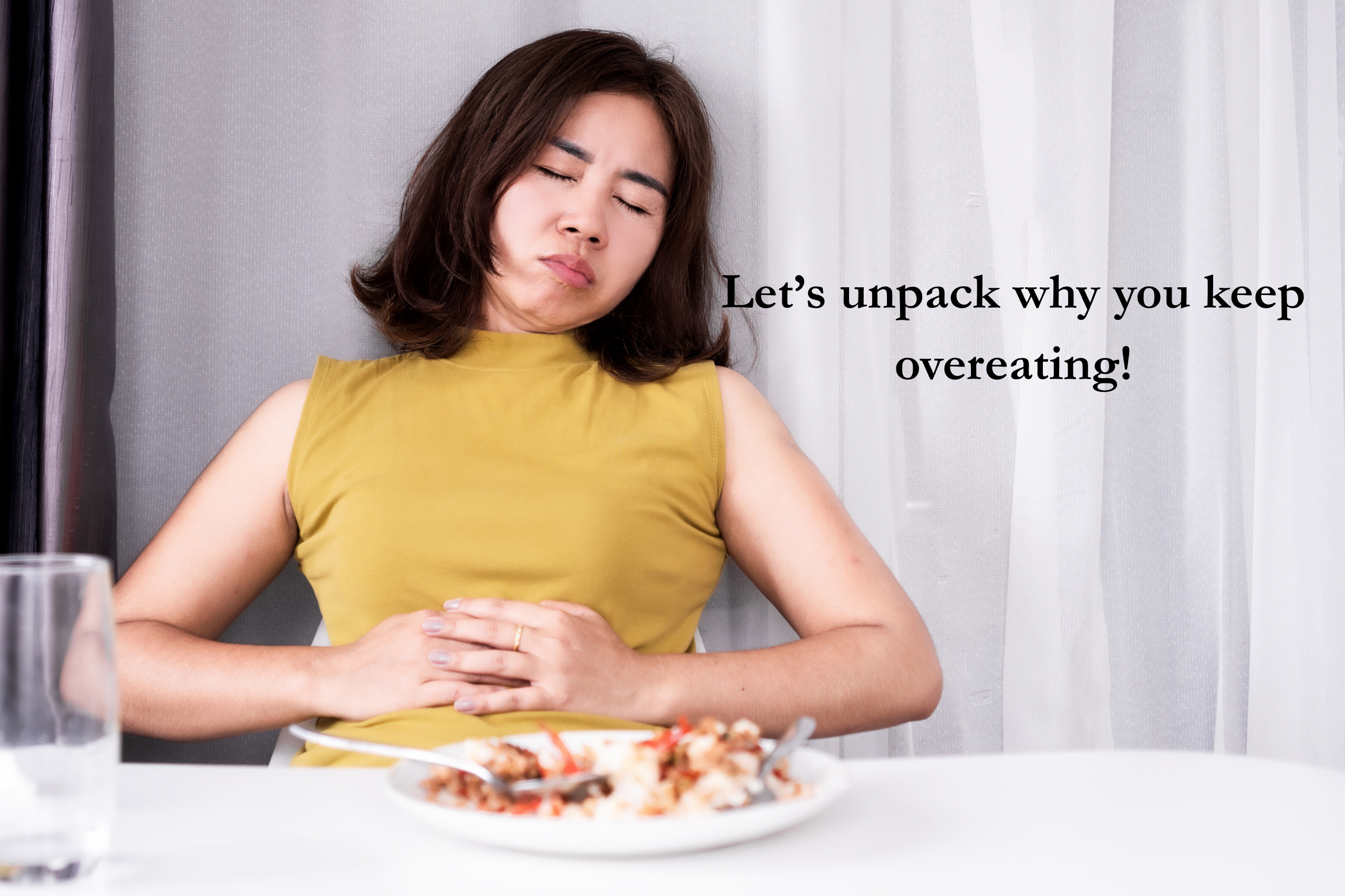
So why is it that we sometimes just get the urge to binge and can’t seem to stop eating.
“I’m not even hungry.”
You might already be feeling full to the point of discomfort, but still you keep shoving food in your mouth until you decide that you ate too much already so it doesn’t matter anymore at this point.
There was a point in my life where I wasn’t able to stop myself. I could eat an entire loaf of bread with jam on it without stopping. And that was after I had already had dinner and eaten half a pie. I would be crying and eating at the same time, unable to stop myself.
Most days weren’t like that. Some days it was only a couple of slices, only too much sugar in cereals, candies, chips, anything to binge in small quantities. But the result was the same. I was unable to control myself. I wasn’t looking to satisfy my hunger; I was looking for something else and using food to cope.
If you know you have been using food in an unhealthy way then let me unpack some of it for you. Not every cravings you have will be caused by hunger. Some will. If you restrict yourself too much throughout the day you might be trying to fight hunger but you should instead simply take a healthier snack or increase your protein, fiber or portions throughout the day. Some people make the mistake of not eating enough for breakfast and lunch only to overeat for dinner as a result of it. You might be eating regularly, choosing “healthy food” and staying within your plan but if your meals are still too light, missing some macronutrients like carbs and protein or simply not satisfying, your body might still feel undernourished. Which is why craving might show up later on.
Eating less isn’t always the solution, sometimes it’s the problem. But there are also other kinds of cravings. Cravings that come from your emotional state. Whether you have been feeling stressed, lonely, bored, fatigue, sad or happy; all of these emotions can trigger emotional eating. When you eat because of stress, you usually end-up with a lower quality diet and a higher body weight (1).
Next time, you are about to overeat, stop yourself and ask yourself this question instead: “What do I really need right now?” Most times the real answer won’t be food. It might be rest, support, comfort, calm, peace and quiet but not another snack.
Most of us haven’t been taught how to regulate and feel our emotions, so food became our way to cope.
What is it you really need? What’s the emotion that you are trying to numb? And respond to this emotion.
If you need peace and quiet, get out of the house for a couple of minutes and simply breathe and exist.
If you’re bored: do something stimulating that you enjoy (ideally without screens).
If you’re stressed: move your body, dance, go for a walk or journal and talk about what’s stressing you out with a friend.
Whatever you need in that moment, respond to that need.
It can be hard to pinpoint exactly what’s the emotion, the trigger, because you’ve been running low for a long time. You’ve been stressed, overwhelmed and tired for a while now. Maybe nothing specific happened that day, maybe you’ve just been stuck in a loop.
And when that happens, often food can become your only source of dopamine throughout the day. Which makes it very difficult to stop overeating.
Dopamine is the neurotransmitter linked to motivation, pleasure, anticipation and drive. When you’re low on dopamine your brain will look for quick fixes to make you feel something. To give you a rush, and that works especially well when the food is crunchy, high in sugar, or in fat. (2)
If you live your day on the autopilot, never stopping, constantly moving and stressed and you don’t have moments to recharge and makes you feel good, then food might be your only comfort. In that case, trying to take it away will seem almost impossible.
If that’s the case, don’t try to take it out just yet. As otherwise, we are taking away your only dopamine source. Instead, let’s find more dopamine sources to slowly replace food. To slowly make you realize that you don’t need it anymore.
Low dopamine can come from feeling stuck, uninspired, doing too many things out of obligation and not enough out of pleasure, the lack of novelty or reward in your daily life. You don’t need more food, you need something that will make you feel good.
You might also be feeling exhausted, physically drained but still be mentally understimulated. You’re busy all day and mentally on but still understimulated in a deeper way. Because your brain isn’t looking for more tasks to do but more creativity, engagement and for something meaningful. Food is therefore an easy stimulation, a break and a moment of relief for your body.
Not every cravings comes from your diet, often it comes from your nervous system, from your emotions, from a deeper reason. Without assessing it and solving the deeper issue, your cravings likely won’t go away.
Your cravings aren’t a problem, they are signals that something needs to be addressed. When you start responding properly, that’s when you get back control over your diet.
This is the kind of work I do with my client to help them regulate their body, improve their health and get back control over their nutrition. Not through restriction but by understanding their body’s signals, by regulating their nervous system and learning to nourish themselves in ways that actually work through awareness and support.
That’s what I teach in my coaching. To see if coaching could be a good fit for you, book a free game-plan chat and let’s talk about what’s been holding you back.
References
1- Van Strien, Tatjana, et al. 1986. “The Dutch Eating Behavior Questionnaire.” International Journal of Eating Disorders.
2- Volkow, Nora D., et al. “Dopamine in Drug Abuse and Addiction: Results of Imaging Studies and Treatment Implications.” Archives of Neurology 64, no. 11 (2007): 1575–1579.
No spam. Just real support to help you heal, reset, and feel like yourself again.