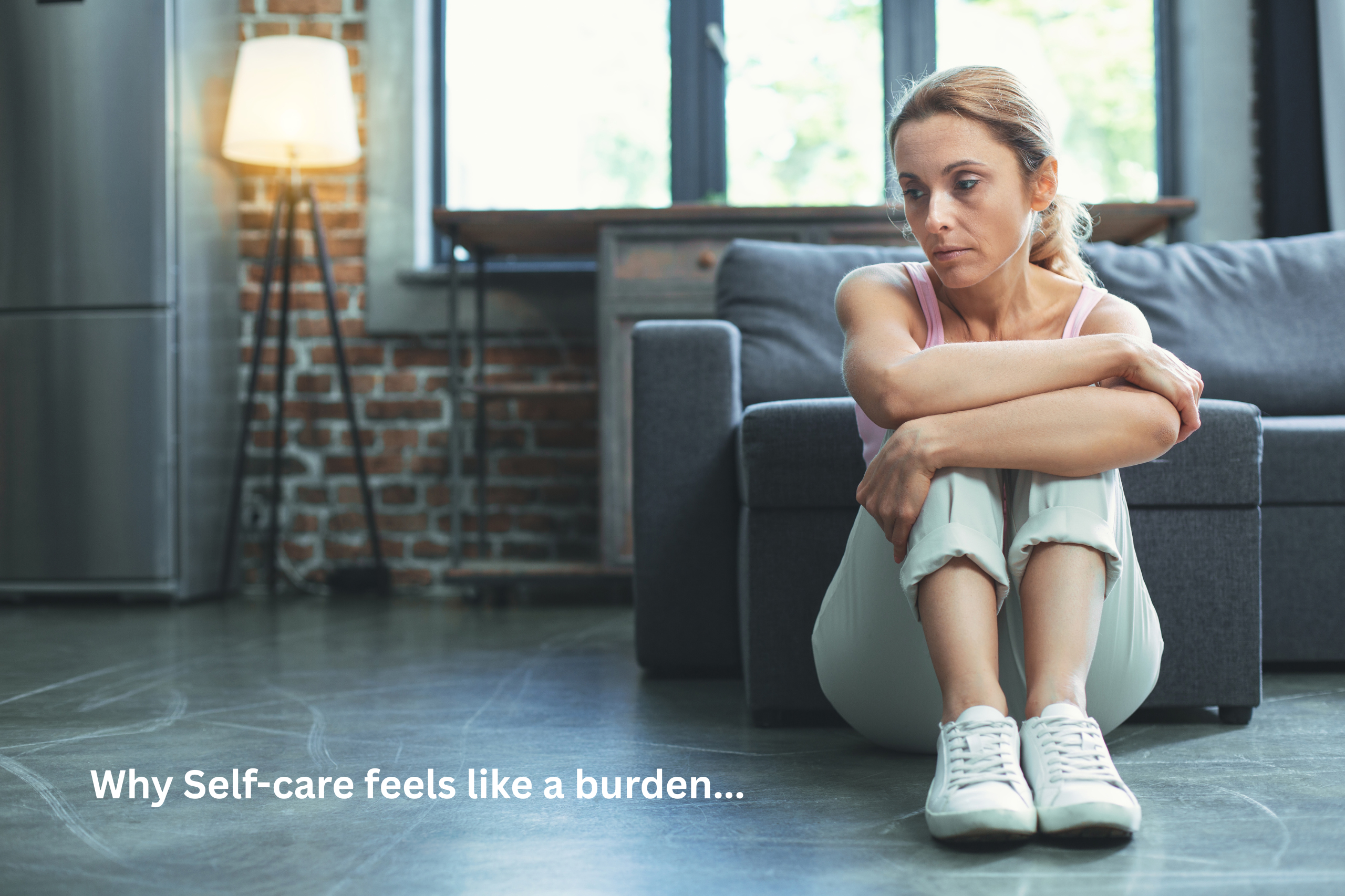
“Sandrine, I get that self-care is important but why does it have to feel like another thing to cross off of my to-do list?”
Can you relate to this?
Because way too often this is what I hear. We all want more time for ourselves, we all want to care for ourselves properly but more often than not, it feels like another task. And you already have enough of those.
“What if self-care just makes me feel even more overwhelmed?“
If self-care feels like a burden, that’s because most of the things you have heard about it are wrong. We all have some ideas of the perfect self-care routine which simply feels exhausting.
You need to drink the green juice, then eat balanced meals, and don’t forget to cut back on sugar. Make sure to meditate everyday and have a stress management routine. You need to workout at least 3x/week and have some mobility exercises as well. Journaling will help you process your emotions and don’t forget to work on yourself in the process. Have a bedtime routine and get 8 hours of sleep every night.
I’m exhausted already…
While all of these are great ways to care for your body it can make you feel overwhelmed when you are already exhausted and barely surviving. The truth is; self-care is going to look and feel different for everyone. The goal is to find the routines, the actions, and the tools that work for you; your body, your hormones, your nervous system and your mental and emotional health.
Forget about the pressure of it.
Forget about what you’ve seen or heard online.
Self-care needs to be adapted to you, and your needs.
The right self-care routine won’t feel like doing more, it should make you feel relieved. The way you’ve been taught self-care is often disconnected from the real world and real life.
Most self-care advice assumes you have extra time, energy, and mental space; which you don’t have right now. You’re already in a state of chronic stress or nervous system dysregulation, and your body is operating in survival mode. In that state, even small tasks can feel overwhelming.
Burnout and exhaustion are not just about the workload and the chores you do at home. It’s also influenced by multiple factors like conflicts, emotional rollercoasters, lack of control over your life, and any stressful event in your day. All of this stress will also impact some of your brain functions like planning, decision-making, and self-control. And it just makes it harder for you to relax and care for yourself if you’re trying to follow a complicated self-care routine (1).
So trying to add more habits on top of an already overloaded life will simply make it worse. The goal isn’t to add things, but to support your body better.
The most underrated self-care tools are the ones helping regulate your nervous system. When it’s dysregulated (fight, flight, freeze, or shutdown), your body will always prioritize safety over growth or happiness.
Which means when that happens your motivation will drop, you will have drops of energy, small tasks will feel heavy and you might disconnect from your body.
This is also why “healthy habits” don’t stick when you are dysregulated. When basic needs like sleep, rest, and emotional support aren’t met, we struggle to maintain our self-care routine. It will be amazingly hard to build a successful routine when your system feels unsafe.
For women especially, self-care has quietly turned into another stress, another pressure especially when they are caregivers, have time restrictions and lack support. So being told to take better care of yourself can just feel like the responsibility is entirely on you, even when your environment is part of the problem.
No wonder it feels heavy.
So what actually works?
You need to start with compassion and regulation which has been shown to help with resilience and to decrease your stress level. It’s easier and smaller than you think it is (2).
Start by trying to implement 3 grounding tools into your day . It could be deep breaths in the morning, before each transition or before and after checking your phone. You could start doing some tapping or you could start activating your valgus nerve with cold technique or humming or other techniques. If you want to learn more nervous system grounding tools or how to regulate your nervous system simply without feeling overwhelmed I have the complete blueprint for you.
The goal is to create moments of quiet in your day. Step outside for a couple of minutes or sit quietly with your coffee. Create times of peace and calm where no one needs you.
Create tiny actions that will help calm your nervous system (3). The goal is to get out of your autopilot and slow down your day. Try to do your normal task but make it 5% slower, walk at a slower pace, reduce the tension in your muscles by only 5%. Little changes but that will make a big difference.
You don’t need the “perfect” routine. You need moments that bring your body back to baseline.
Try:
Mindfulness-based approaches have been shown to improve self-compassion and reduce burnout symptoms in multiple studies and meta-analyses .
BUT… this only works when it comes from you and isn’t forced.
Some days you’ll have energy. Some days you won’t.
Instead of fighting it, adapt to it. On a low-energy day, focus on resting, nourishing, and slow down. On higher-energy days, focus on moving, organizing or creating.
This adaptation will help you get out of your autopilot loop.
Self-care isn’t complicated routines, strict habits, and doing everything right. It’s saying no without guilt, eating when you’re actually hungry, resting before you burnout and asking for support even when it feels uncomfortable.
It’s less about adding… and more about removing what drains you.
Pick one thing that feels doable and good.
It could be:
Consistency with one action is far more powerful than trying to do everything at once.
So, if self-care feels hard right now, it’s because your system is overloaded, and you’ve been trying to do too much. You don’t need more pressure. You need support.
And this is how it all changed.
When you learn how to:
Self-care stops feeling like a burden and you can finally learn to appreciate it.
No spam. Just real support to help you heal, reset, and feel like yourself again.