You might not fit into your old clothes, you might not like what the mirror is showing you, or hearing the casual question from a colleague or family member: “When are you going back to work?”
But those things don’t matter for now.
For many new mothers, these comments or perceptions hit harder than anyone expects. They are reminders that the world assumes motherhood should be a temporary pause, not a life-altering transformation. Somehow, after labor, mothers are expected to bounce back physically, emotionally, and professionally almost instantly. As if they hadn’t just gone through a big life and identity change.
Not only is this expectation incredibly hard to achieve, but it’s also harmful, and it simply accentuates the shame and sadness it creates. But it doesn’t have to define you.
“Bounce back.” It sounds encouraging, almost motivational. But what does it really mean?
It suggests speed, perfection, and the erasure of all change. It implies that any pause, softness, or struggle is a failure.
Where does this pressure come from? Media, fitness culture, capitalism, and even well-meaning family members. They suggest that your body should be back to “normal,” your energy should be unlimited, and your mental health should be intact. All of it before you’ve even finished processing childbirth and your new role as a mother.
In the postpartum period, women experience intense pressure to return to their pre‑pregnancy body shape and size, and that pressure aligns with reduced body image satisfaction and lower self‑esteem (1).
In a study, they found that 70% of postpartum women were concerned about their weight, and 43% said returning to pre‑pregnancy weight was very important. (2).
The truth is: it’s toxic. It ignores the reality that birth is an important event for your body and mind. Recovery isn’t a race; it’s a journey.
There’s still so much for mothers to heal postpartum. Healing the body and the physical exhaustion that never seems to end. Healing your connection with yourself and your new identity. Learning how to manage work and family, or wondering if you’re “doing enough” as a mom. Healing your expectations and stop comparing yourself to curated images of “supermoms” who seem to have it all together, while you feel like you’re barely keeping your head above water.
This toxic idea of bouncing back isolates you, destroys your confidence, and seems to tell you that you are failing, even when you are giving everything you have. It’s no wonder mothers often report high levels of anxiety, depression, and postpartum stress. There is a balance to find between wanting to care for your body and having to lose weight quickly at all costs.
Your mental health matters. Not just for you, but for your child and your family. The pressure to “bounce back” often comes at the cost of emotional well-being. Constantly pushing yourself to perform, to be productive, to look a certain way, can activate stress pathways in the nervous system, making anxiety, irritability, and fatigue worse.
Self-love and mental health are the foundation of sustainable motherhood. When you honor your feelings, rest when your body asks, and create space to heal, you are giving yourself permission to thrive, not just survive. We often talk about the post-partum period being 3 months, but recovery after childbirth is much more complex than that, and the pressure we put on women can delay this recovery.
In a large survey of women who had given birth within the last three years, 66% said they were still recovering and 59% still felt this way two years later (3).
It’s okay to mourn your pre-baby body, your previous freedom, and the version of yourself you once knew. It’s okay to still want to improve it and work on your physical health, but you need to also give yourself understanding and compassion.
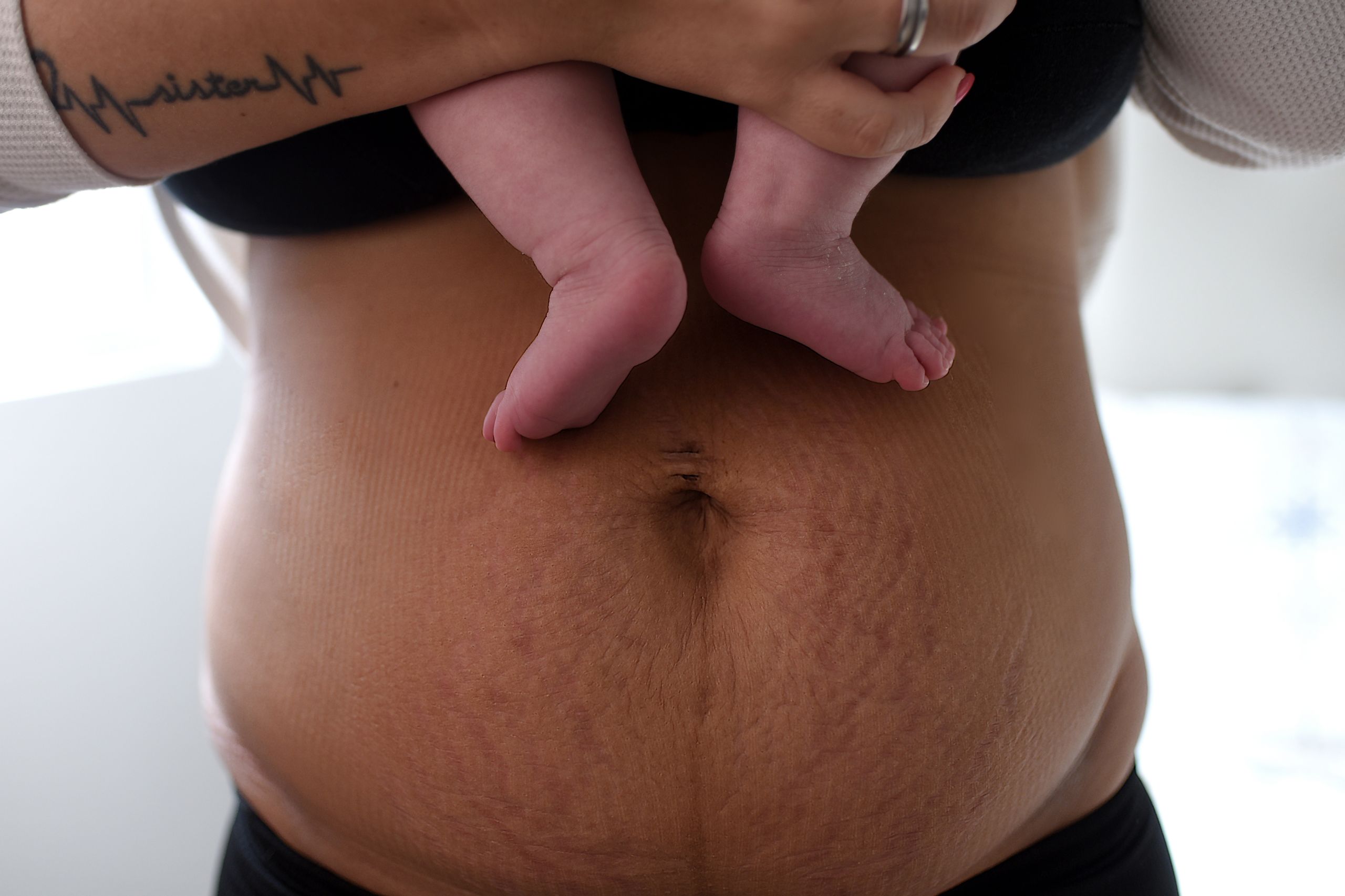
You didn’t lose your body; you created a human being. Every scar, stretch mark, and curve is a testament to your strength, it’s not a setback.
Reframing your journey is crucial:
Here are a few tools to start prioritizing mental health and self-love:
Healing looks different for everyone. It doesn’t have a timeline or a checklist. Your journey is unique, valid, and deserving of respect.
You’ve become someone new. Someone stronger, more resilient, and more alive in ways you might not yet recognize. This version of you deserves care, not shame.
If you feel like you haven’t bounced back, remember: you’re not alone; you’re just human. You are not behind. You are not broken. Focus on care and the rest will follow in your own time, and if you want support through this part of your life, you can always reach out to me.
To follow a complete method that will help you heal through this period of your life go into the Course section to find the Gentle Return Postpartum Course.
1- Lee, Y., et al. A systematic review of influences and outcomes of body image in the postpartum period. Journal of Women’s Health, 55 studies analyzed (2025)
2-Villaverde Gutiérrez, et al. Exploring the pressure to “bounce back” to pre‑pregnancy weight after birth. Midwifery 145 (2025)
3-Talker Research for Intimina Survey (2025). The majority of new moms are still recovering from giving birth, with some feeling effects three years later. New York Post.
No spam. Just real support to help you heal, reset, and feel like yourself again.